
Monthly Archives: May 2026

Karate-Do 空手道

Karate-Do (空手道) – The Meaning and Evolution of Karate

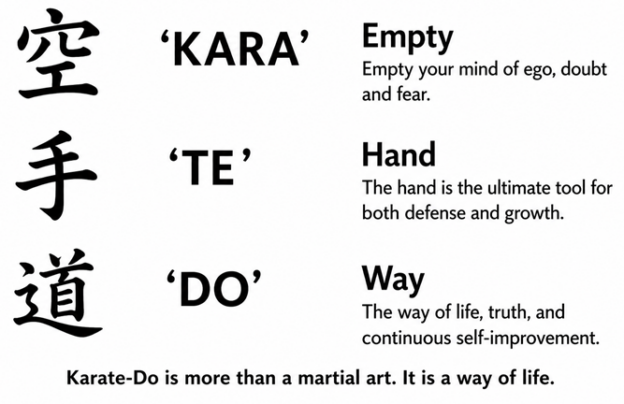
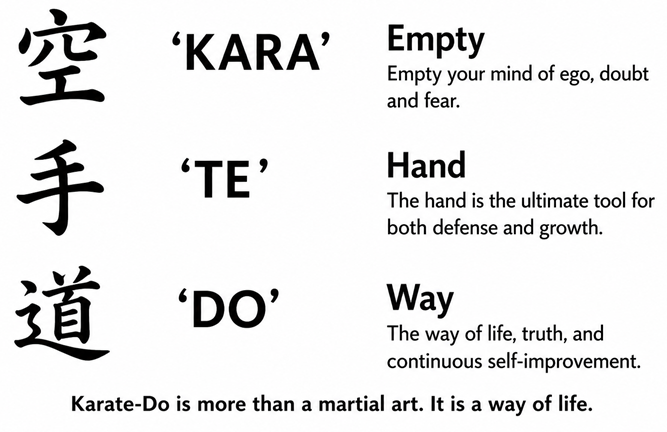
The word Karate-Do (空手道) is composed of three Japanese characters:
Kara (空) – Empty
Te (手) – Hand
Do (道) – The philosophical way or path

Together, Karate-Do means “The Way of the Empty Hand.”
Originally, the indigenous fighting art of Okinawa, known as Tode, was heavily influenced by Chinese martial arts and was therefore written as “Chinese Hand” (唐手).

During the 1920s, Gichin Funakoshi, a student of Anko Itosu, introduced Karate to mainland Japan. While seeking official recognition from the Dai Nippon Butoku Kai, the original kanji meaning “Chinese Hand” was not accepted. As a result, the character Kara was changed from “Chinese” (唐) to “Empty” (空), while retaining the same pronunciation. This transformation emphasized the philosophical and spiritual nature of the art rather than its foreign origin. Thus, the modern term Karate-Do — “The Way of the Empty Hand” was officially established.

Because of his efforts in spreading and formalizing Karate in Japan, Gichin Funakoshi is widely regarded as the father of modern Karate in Japan.

Section : Technical Insight   Title: Karatedo 空手道 
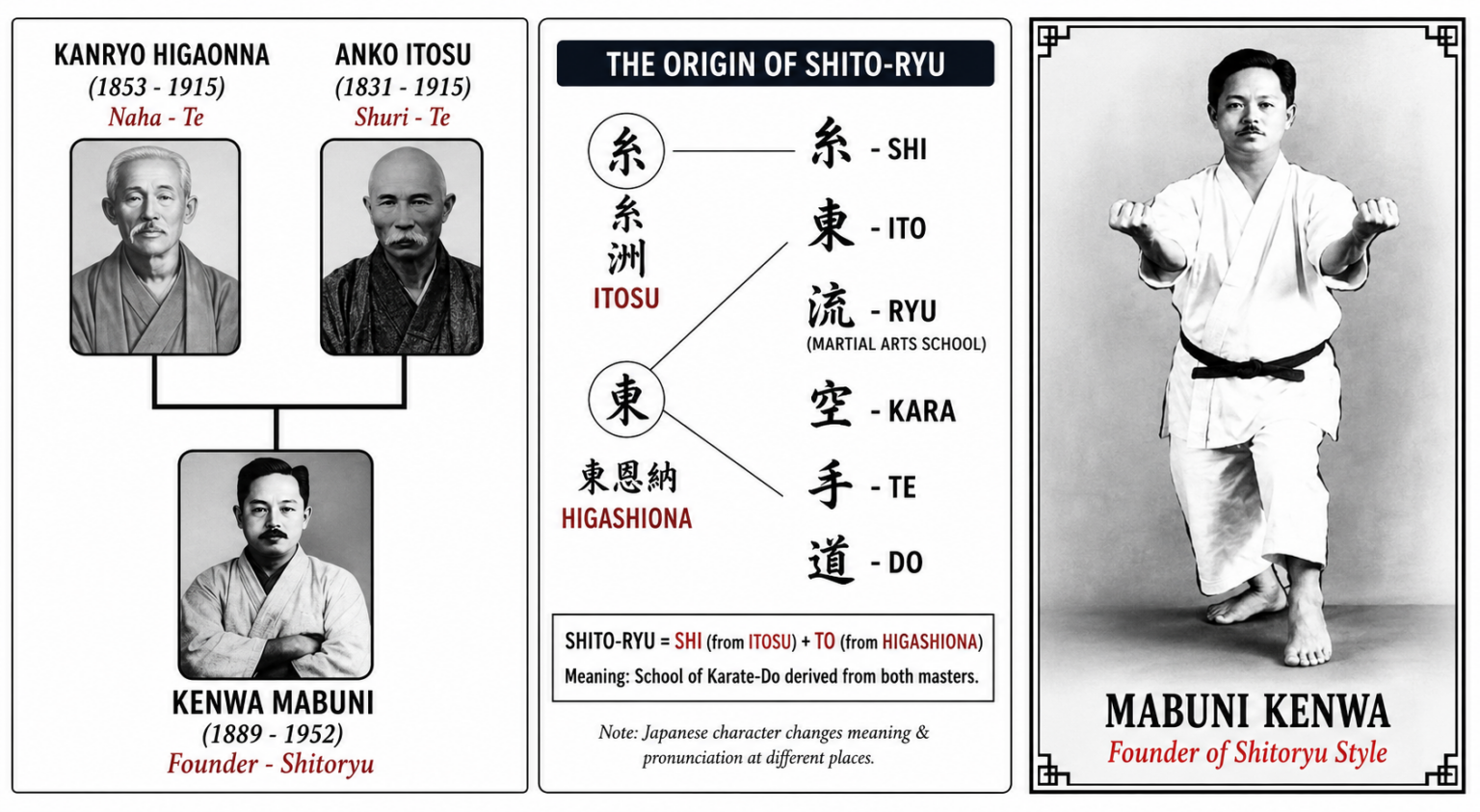
Shito-Ryu History 糸東流歴史

Kenwa Mabuni - Founder of Shito-Ryu Karate-Do

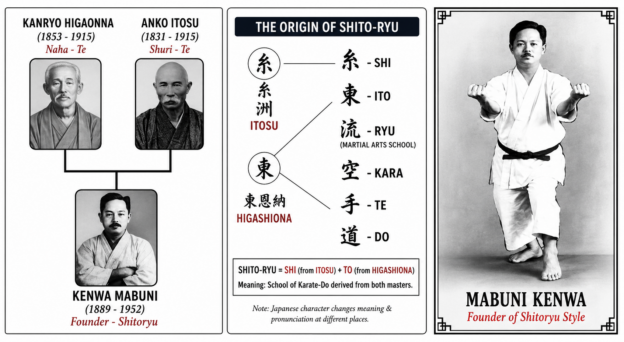
Kenwa Mabuni was born on November 14, 1889, in Shuri, Okinawa, Japan. Descended from the warrior lineage of the Ryukyu Kingdom, he began Karate training at the age of 13 under Anko Itosu, mastering the art of Shuri-Te through years of dedicated practice.

Later, he studied Naha-Te under Kanryo Higaonna, combining the teachings of both master's to establish Shito-Ryu Karate-Do. The name “Shito” is derived from the kanji of his two teachers’ names - Itosu (糸) and Higashionna (東).

Master Mabuni strongly believed that Kata is the soul of Karate-Do, emphasizing that true understanding of Karate comes through the study of Kata, Bunkai, and practical application. He introduced systematic concepts of Bunkai and Hokei Kumite to explain the deeper meaning behind kata movements.

Following World War II, he devoted his life to preserving and developing traditional Karate-Do until his passing on May 23, 1952. Today, his teachings continue to live on through practitioners of Shito-Ryu Karate worldwide, preserving the technical depth, philosophy, and spirit of authentic Karate-Do.

Section : Technical Insight   Title: Shitoryu Karatedo History 糸東流歴史

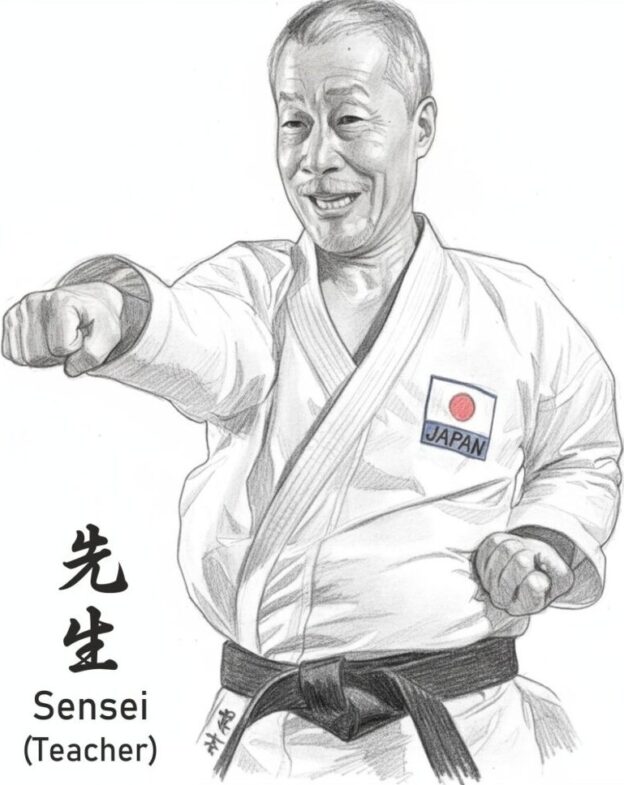
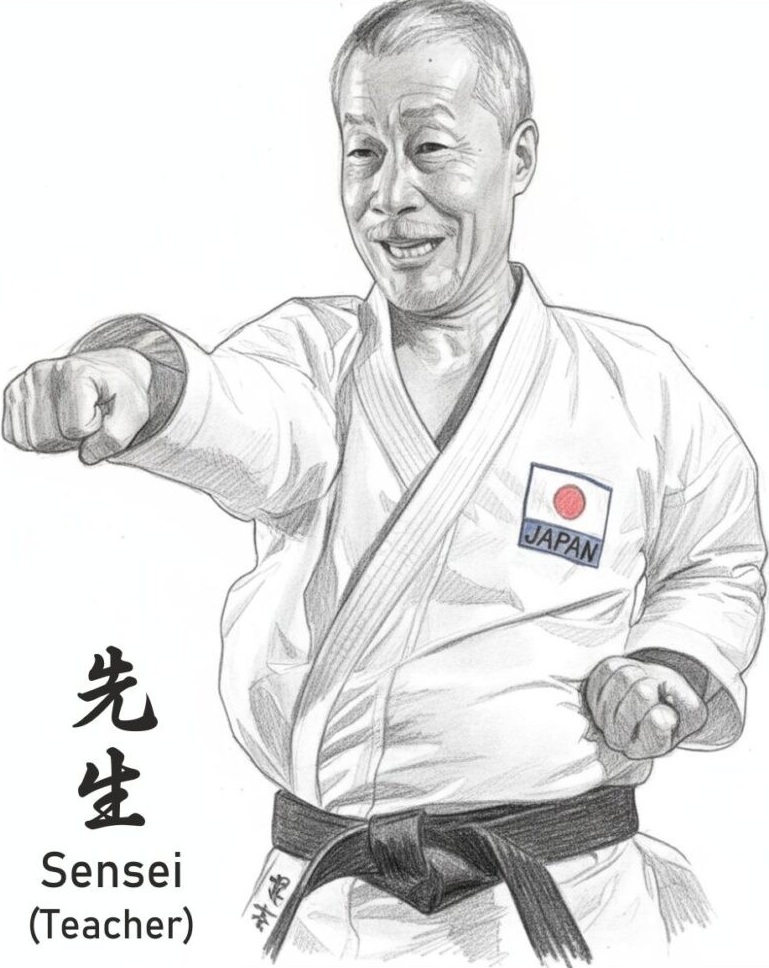
Sensei Teacher 先生

The Importance of the Sensei Student Relationship in Karate-Do

The relationship between a Sensei and student is one of the foundations of traditional Karate-Do. True martial arts cannot be taught through words alone; they require direct guidance, demonstration, correction, and shared practice.

A skilled Sensei not only teaches techniques, but also shapes the student’s discipline, attitude, character, and understanding of Budo spirit. Through close observation and proper instruction, the teacher helps students refine both their physical and mental development.

At the same time, students learn by observing the actions, behavior, and example set by their Sensei. This mutual trust and respect strengthen the bond within the Dojo and preserve the true spirit of martial arts.

Ultimately, the Sensei student relationship is not only about learning techniques — it is a path of self-cultivation, discipline, and lifelong growth in Karate-Do.

Section : Technical Insight   Title: Sensei (Teacher) 先生

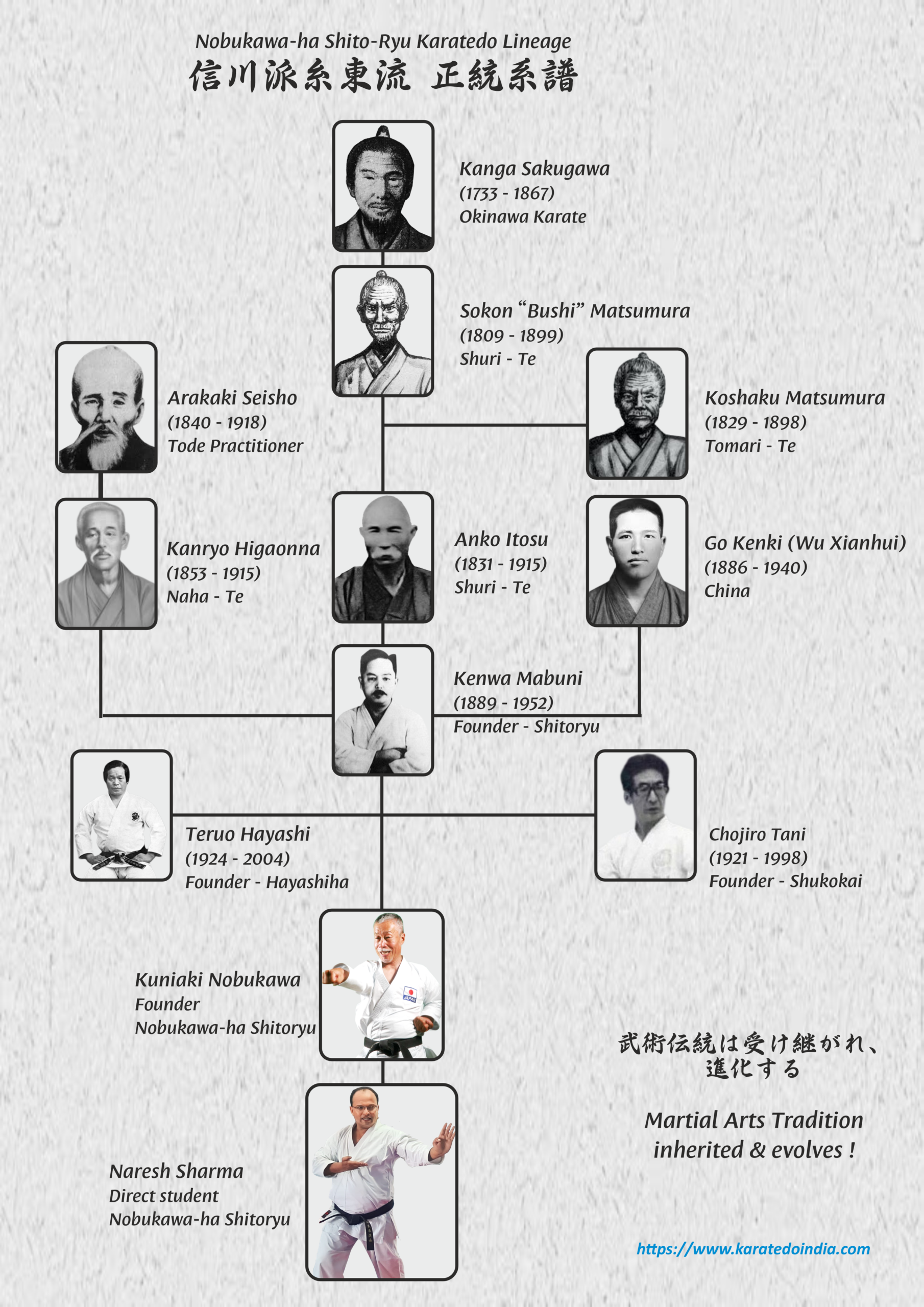
Genealogical Karate Chart 系図

Importance of Lineage in Nobukawa-ha Shito-Ryu Karate
By Naresh Sharma

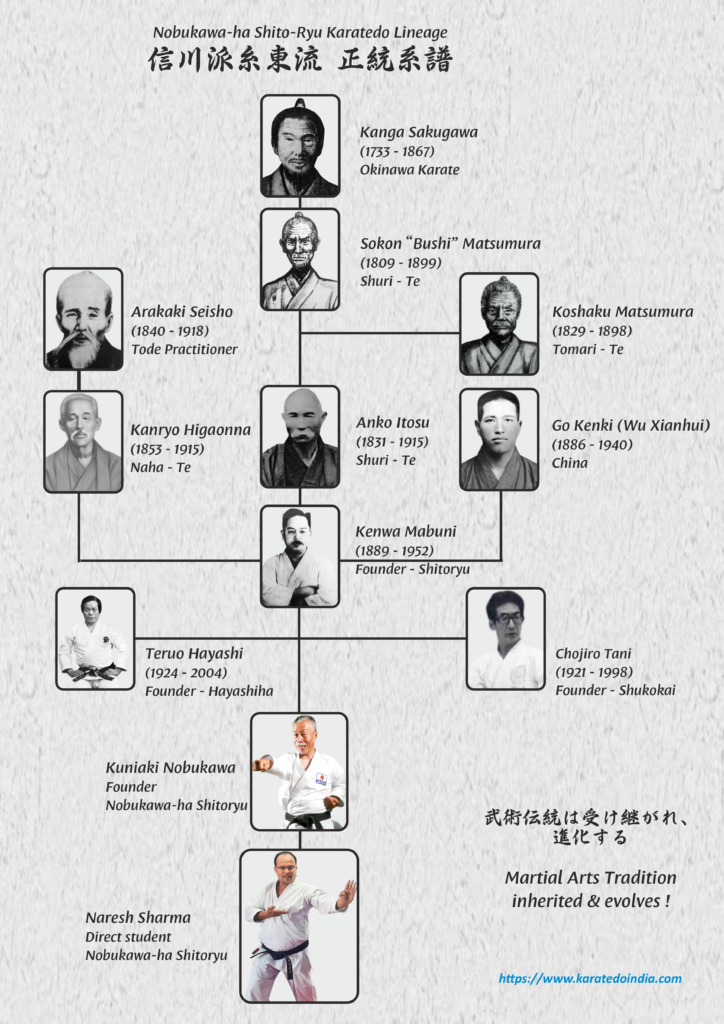
In Nobukawa-ha Shito-Ryu Karate, lineage (Keizu 系図) represents the authentic transmission of traditional Karate from master to student across generations. From Kenwa Mabuni through master's such as Teruo Hayashi, Chojiro Tani, and Kuniaki Nobukawa, the art has been preserved with technical precision, discipline, and true Budo spirit.

Lineage safeguards the authenticity of Kata, Bunkai, and traditional teachings, ensuring that Karate is practiced as originally intended. In an era of constant modification, lineage remains a symbol of credibility, responsibility, and respect for tradition.

More than history, lineage carries the true spirit of Karate-Do - Rei (respect), Gi (righteousness), Shin (honesty), and Yu (courage) - preserving the legacy of genuine Karate for future generations.

Section updated in: Technical Insight  Title: Genealogical karate-chart 系図

Kata 型 / 形 – Forms | Patterns of Karate

Kata (型 / 形) is a Japanese term meaning “form” or “pattern.” It refers to a structured sequence of martial arts techniques performed in a precise and choreographed manner. Kata serves as one of the most important methods for preserving and transmitting the traditional techniques and principles of martial arts from generation to generation.

Through regular practice of Kata,
students develop:
Discipline
Precision
Balance
Coordination
Focus
Proper body mechanics


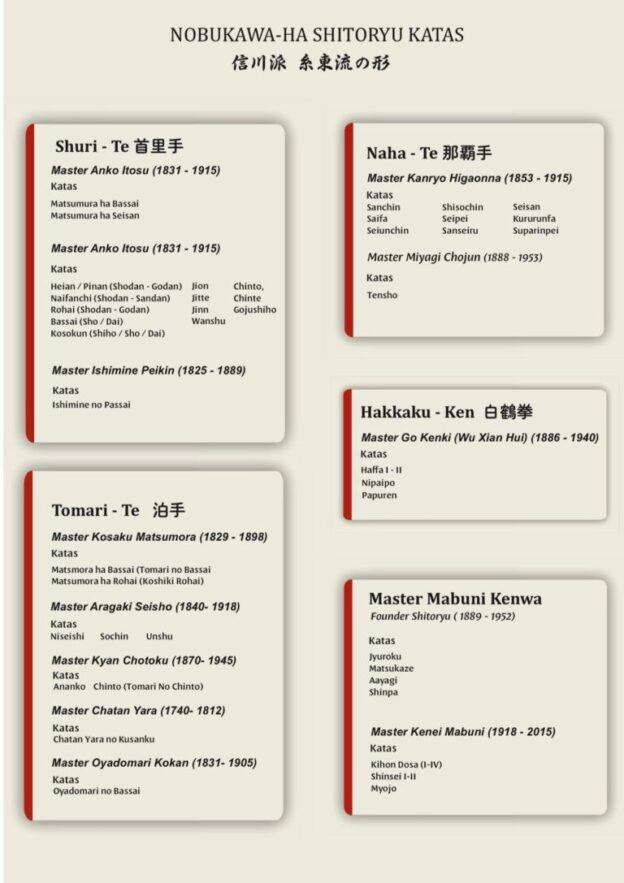
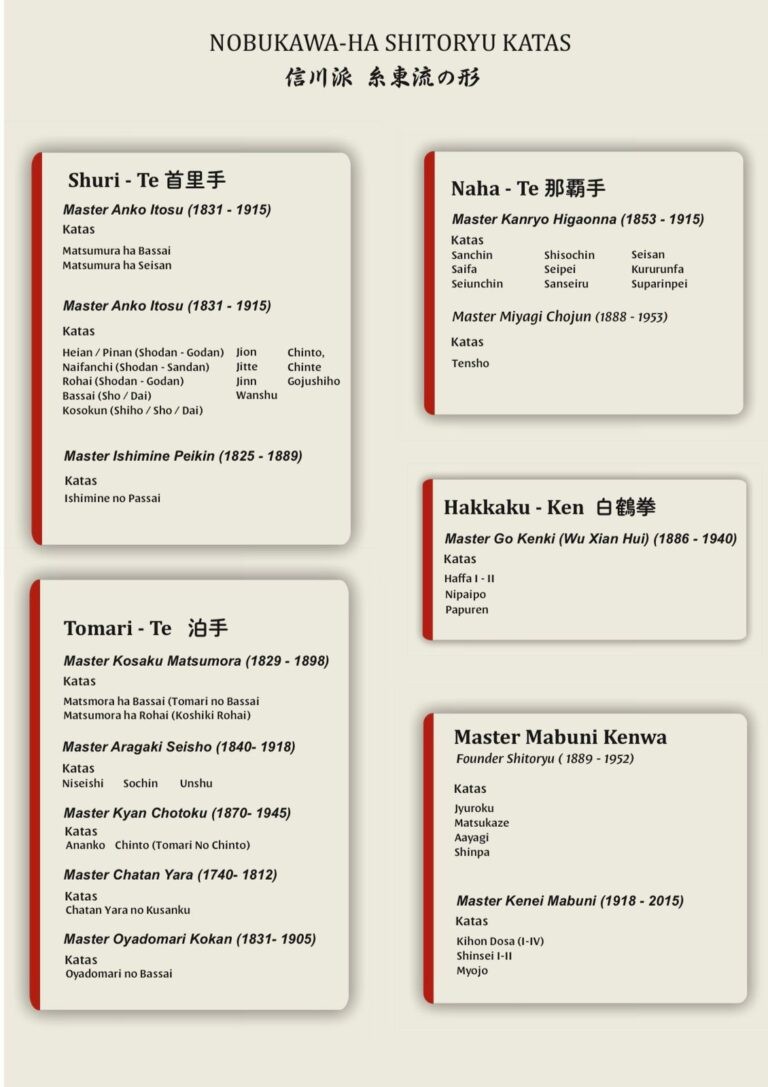
Kata training helps practitioners memorize, refine, and perfect techniques while cultivating mental concentration and physical control. Beyond physical movement, Kata also teaches rhythm, timing, breathing, awareness, and the practical application of techniques.Kata is not unique to Karate alone; it is also practiced in many traditional Japanese martial arts such as Iaido, Judo, Kendo, and Kenpo.On the left side, you will find the list of Kata that we practice and teach as part of our training curriculum.

Section updated in: Technical Insight  Title: Shito-Ryu Kata 型 or 形 

Tachikata たち型

Tachikata (立ち方) – The Foundation of Karate Stances

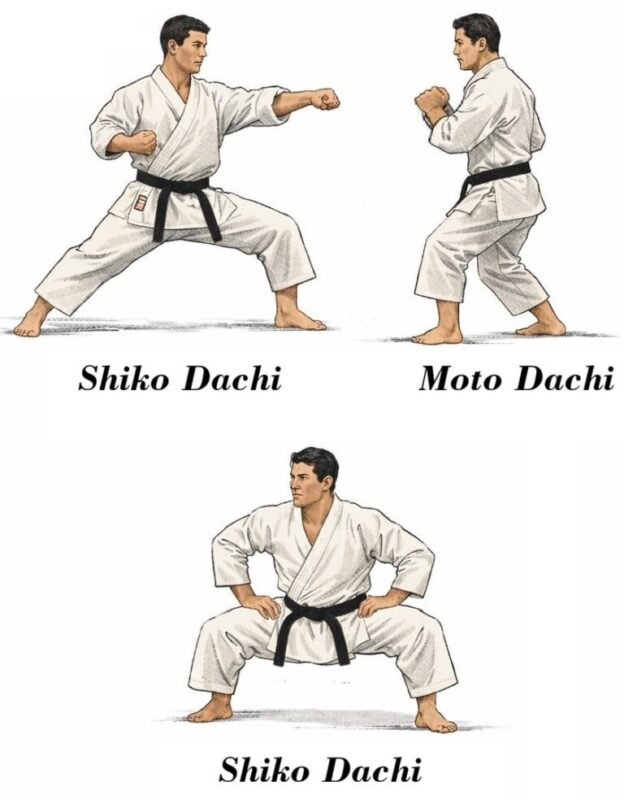
It refers to the stances and lower body positions used in Karate. Correct body positioning and balance form the foundation of effective karate techniques. Powerful, accurate, smooth, and fast techniques can only be executed through stable and well-structured stances.

A Karateka must maintain a strong and balanced position without becoming rigid, while also being able to transition smoothly from one stance to another. Proper stances develop stability, mobility, balance, and the efficient generation of power.

Stances may be classified according to:
High and one-leg stances
Middle-high and lower stances
The alignment of the feet, knees, and center of gravity


Different stances also utilize varying forms of leg tension:
Inside tension such as in Sanchin-dachi 
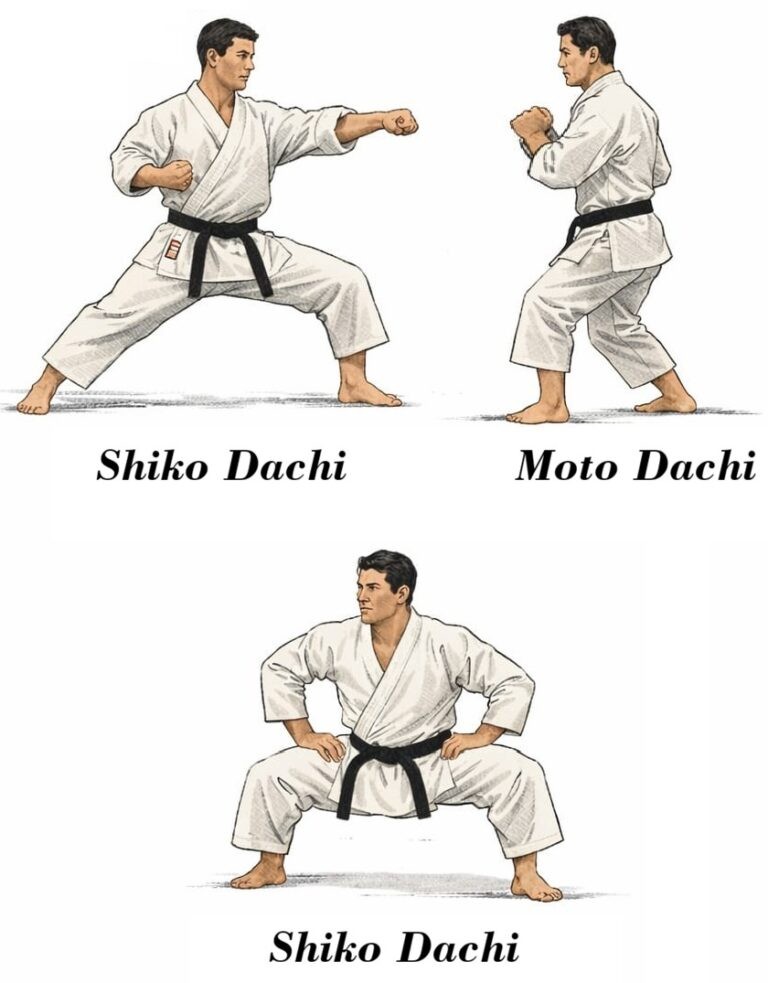
Outside tension - such as in Shiko-dachi

Important Principles of Stances
Soles of the Feet : The ball of the foot or the full sole, depending on the stance, should maintain firm contact with the floor for stability and grip.
Ankles : The ankles must remain flexible and strong to support body weight and movement efficiently.
Knees: The knees should bend naturally in the direction of the toes while maintaining proper alignment.Leg Tension: The legs should apply appropriate inward or outward tension according to the requirements of the stance.
Hips Position: The hips must remain correctly aligned to maintain posture, balance, and effective technique execution.
Center of Gravity: Lowering the center of gravity increases stability and strength. The Hara (Tanden) located below the navel, should remain engaged to improve balance, body control, and power generation.

Types of Stances : To perform any stance correctly:
Lower the center of gravity by bending the knees
Maintain correct posture and alignment
Apply proper inward or outward leg tension


High & One-Leg Stances

Heisoku-dachi (閉足立) – Joined feet stance
Musubi-dachi (結び立) – Heels together with toes outward
Heiko-dachi (平行立) – Parallel stance
Soto-hachiji-dachi – Toes pointed outward
Uchi-hachiji-dachi – Heels pointed outward
Sagi-ashi-dachi (鷺足立) – Heron stance
Tsuru-ashi-dachi (鶴足立) – Crane stance
Uki-ashi-dachi – Floating one-leg stance

Middle-High Stances
Naihanchi-dachi (内歩進立) – Wide parallel stance with inward knee tension
Moto-dachi (基立) – Basic or fighting stance
Sanchin-dachi (三戦立) – Hourglass stance
Han Zenkutsu-dachi (半前屈立) – Half front stance
Seisan-dachi (十三立) – Universal stance
Renoji-dachi (レの字立) – L-shaped stance

Lower Stances
Kosa-dachi (交差立) – Cross stance
Kokutsu-dachi (後屈立) – Back stance
Shiko-dachi (四股立) – Sumo stance
Zenkutsu-dachi (前屈立) – Front stance
Nekoashi-dachi (猫足立) – Cat stance
Katahiza-dachi (片膝立ち) – One-knee stance.

Through disciplined and regular practice, Tachikata develops stability, mobility, balance, and the ability to generate effective power, forming an essential foundation of traditional Karate-Do.

Section : Technical Insight   Title: Tachikata たち型


Five Principles of Defense

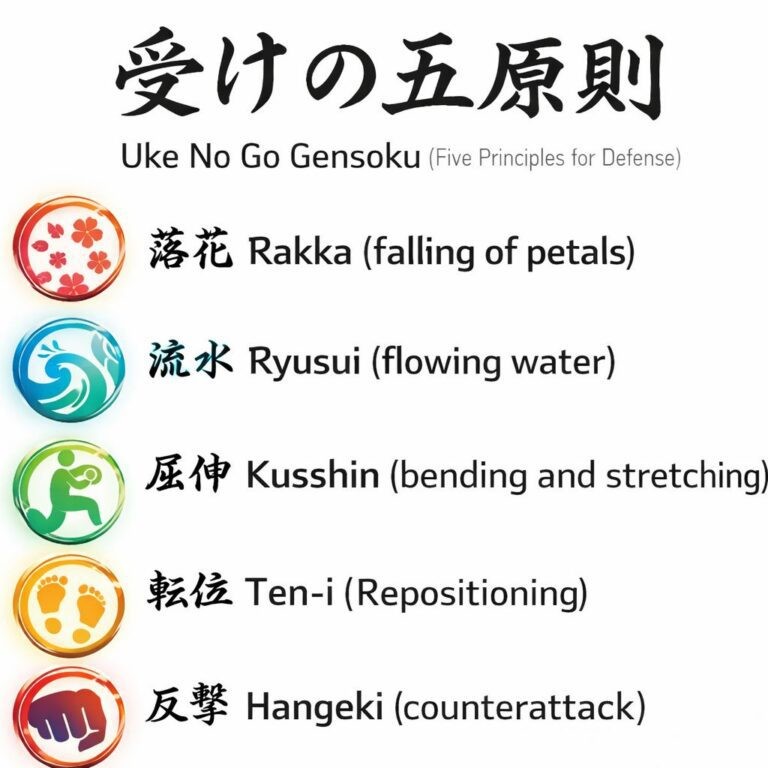
Uke no Go Gensoku (受けの五原則)The Five Principles of DefenseThe Kenwa Mabuni system of Shito-Ryu Karate emphasizes the Five Principles of Defense, known as Uke no Go Gensoku (受けの五原則). These principles teach the proper methods of receiving, redirecting, evading, and countering an opponent’s attack.

落花 – Rakka Falling Petals
Receiving the opponent’s attack with a strong and decisive defensive technique while maintaining one’s position. The block should be so powerful that, if applied to the trunk of a tree, it would cause the leaves to fall like petals.
Example: Defending against a Chudan Tsuki using Yoko Uke or Yoko Uchi from a stable stance.

流水 – Ryusui Flowing Water
Redirecting the opponent’s attack smoothly and naturally without meeting force directly with force. The defense should flow continuously like water.
Example: Receiving a Jodan Tsuki using Sukui Uke, Nagashi Uke, or Kaishu Uke to guide the attack away.

屈伸 – Kusshin Bending and Stretching

Avoiding or controlling the attack through body movement, bending, lowering, or shifting position while preparing for a counterattack.
Example: Evading a Chudan Tsuki by moving into Nekoashi Dachi and countering by transitioning into Zenkutsu Dachi.

転位 – Ten-i Repositioning
Moving off the line of attack to create a superior angle for defense and counterattack.
Example: Dodging a Jodan Tsuki by shifting the head or body to the left or right of the attack line.

反撃 – Hangeki Counterattack
Responding immediately with an effective offensive technique rather than remaining passive after defense.
Example: Countering with techniques such as Tsuki, Morote Tsuki, or follow-up Uke and striking combinations.

Section : Karate Techniques Insight    Title: Uke No Go Gensoku 受けの五原則 | Five Principles for Defense

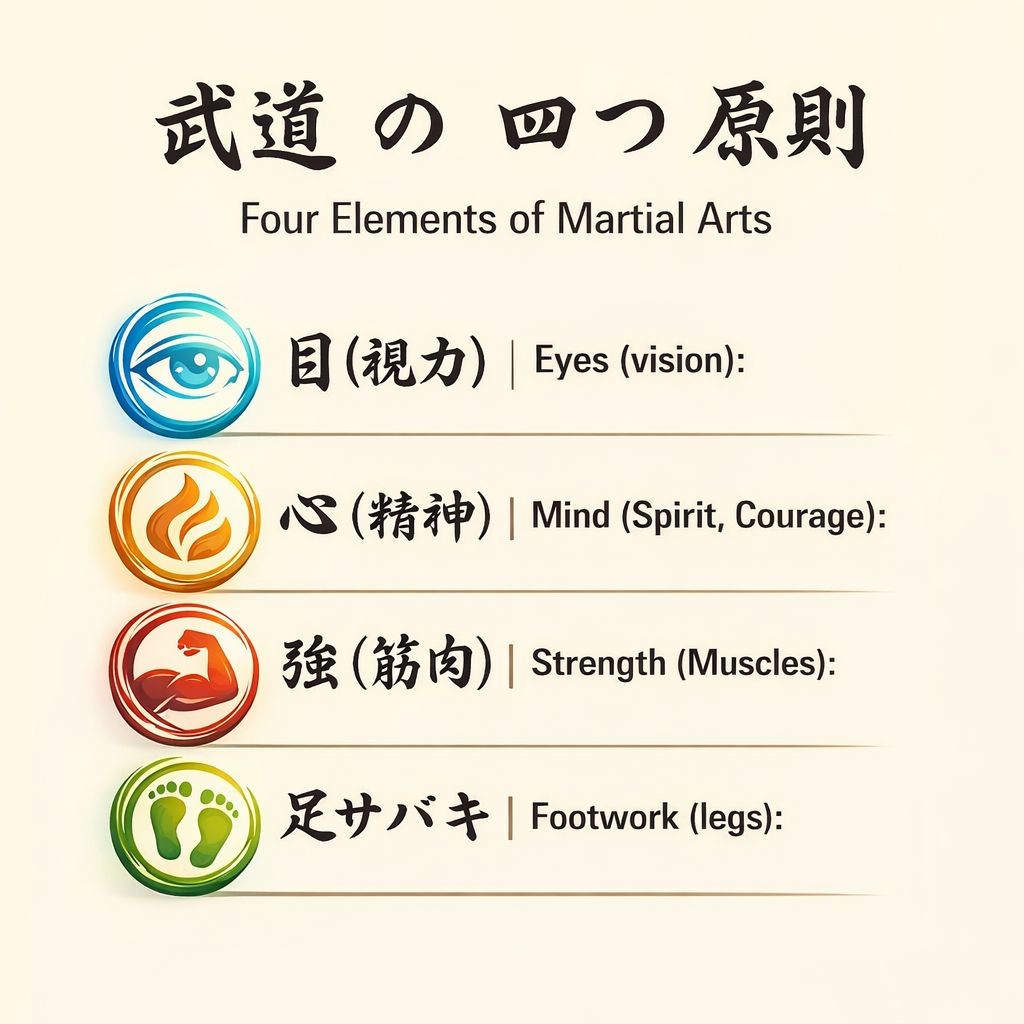
Four Elements of Martial Arts – 武道 の 四つ 原則

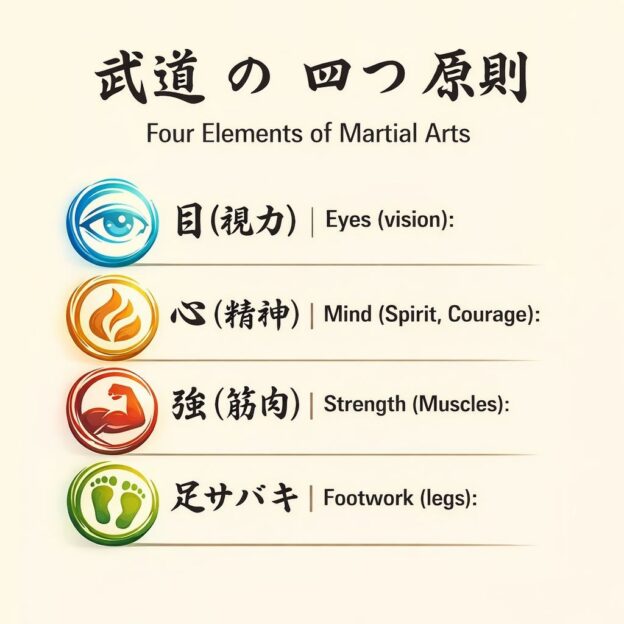
武道の四つ原則The Four Essential Principles of Martial ArtsThe four essential elements of martial arts, which also apply to Karate-Do, are fundamental principles that guide both technical development and mental discipline.

目 (Moku / Vision) – Eyes & Awareness
Keep your eyes focused on the opponent while carefully observing their movements and intentions. A martial artist must instantly analyze the surrounding environment, including terrain, distance, weather, and positioning. Proper awareness and advantageous positioning are the first steps toward success. Although eye contact can establish mental dominance, one should not focus only on the opponent’s eyes. Instead, maintain awareness of the entire body through peripheral vision. During Kihon and Kata practice, keep the gaze forward at eye level while remaining aware of the surroundings. Avoid looking down unnecessarily, as it reduces awareness and creates vulnerability.

心 (Kokoro / Seishin)
- Mind & Spirit
Mental strength develops courage, composure, and fighting spirit. A martial artist should remain calm, emotionally balanced, and mentally focused under pressure. Neither fear nor overexcitement should control the mind. A composed spirit allows clear judgment, decisive action, and the ability to respond effectively in any situation.

足捌き (Ashi Sabaki)
Footwork & Movement Efficient movement requires balance, speed, flexibility, and stability. Proper footwork is essential for both offense and defense.Maintain a low and stable center of gravity while moving naturally and continuously. Avoid remaining stationary for too long, as constant repositioning creates tactical advantage. Dragging the feet reduces mobility and speed, while excessive jumping can expose openings and weaken balance.

強 (Tsuyosa / Strength)
Physical Power Physical conditioning and muscular strength are necessary to generate effective power and endurance. The body must be trained to develop stamina, explosive movement, speed, and precision.Through disciplined and regular practice, strength becomes controlled, efficient, and fully integrated with technique.Together, these four principles form an essential foundation of martial arts training. Through continuous practice and self-discipline, they develop not only technical skill, but also character, awareness, and true martial spirit.

Section : Karate Techniques Insight   Title:  The Four Elements of Martial Art 武道 の 四つ 原則

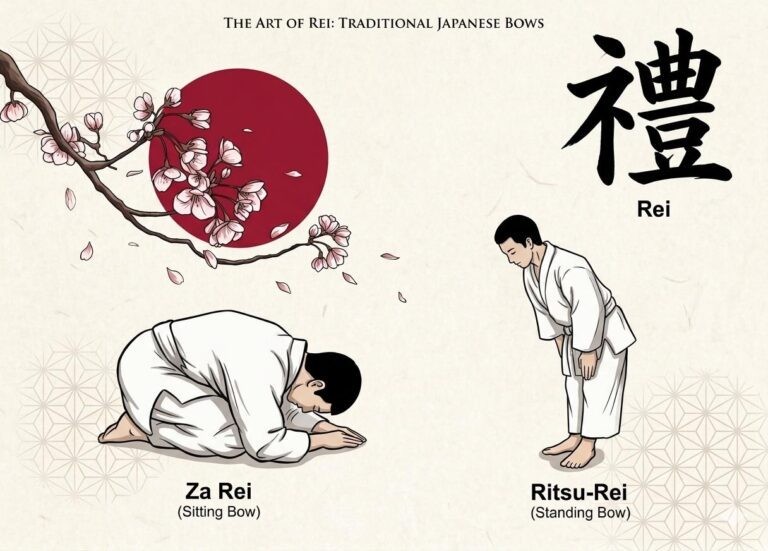
Reishiki 礼式 or Reigi 礼儀

The Spirit of Respect in Martial Arts Rei (礼) originates from the Japanese concept of Reigi, meaning respect, courtesy, and proper manners. In Japanese martial arts, Rei is far more than a formal bow  it is a fundamental principle that shapes the character and spirit of the practitioner.

The act of bowing expresses humility, discipline, and respect toward one’s Sensei, fellow practitioners, and the Dojo itself. Bowing before and after training also reinforces mutual trust and appreciation between training partners. However, Rei extends beyond physical gestures. It reflects an inner attitude of sincerity, gratitude, and awareness. Through the practice of Rei, martial artists cultivate respect not only within the Dojo, but also in daily life and human relationships. In essence, Rei forms the foundation of true martial spirit and proper Budo conduct.

Section: Technical Insight   Title: Reishiki 礼式 or Reigi 礼儀

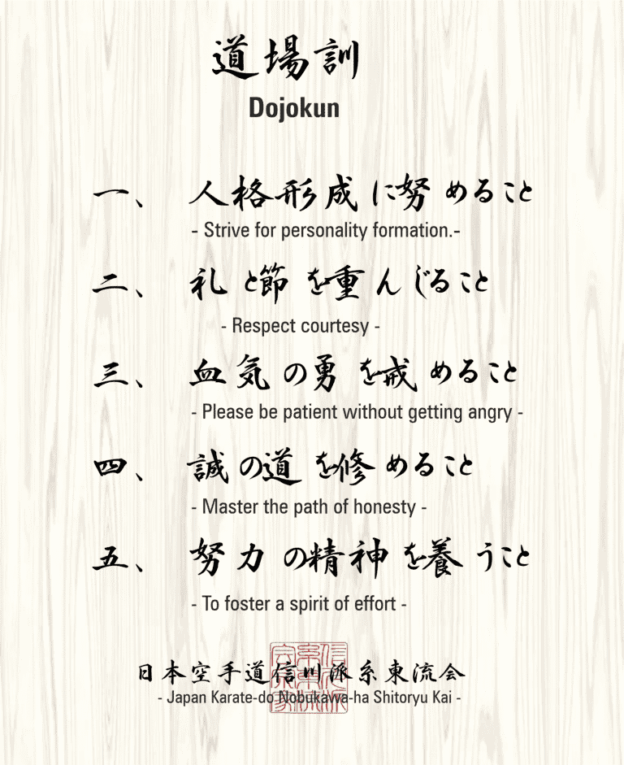
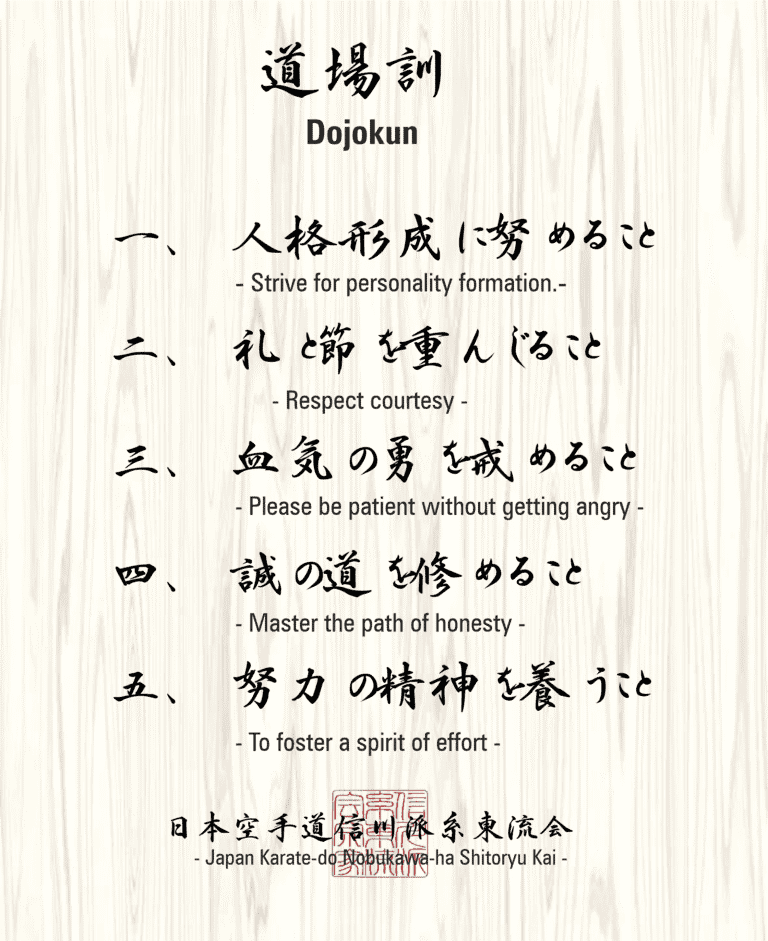
Dojo Kun 道場訓

Dojo Kun (道場訓) are the rules and guiding principles of the training hall in Japanese martial arts. They are usually displayed at the entrance or at the Shomen (front) of the dojo, and all students are expected to follow them with discipline and respect. In many traditional schools, the Dojo Kun is recited at the end of class to reinforce good character, humility, and proper conduct.

Section: Technical Insight   Title: Dojo Kun 道場訓