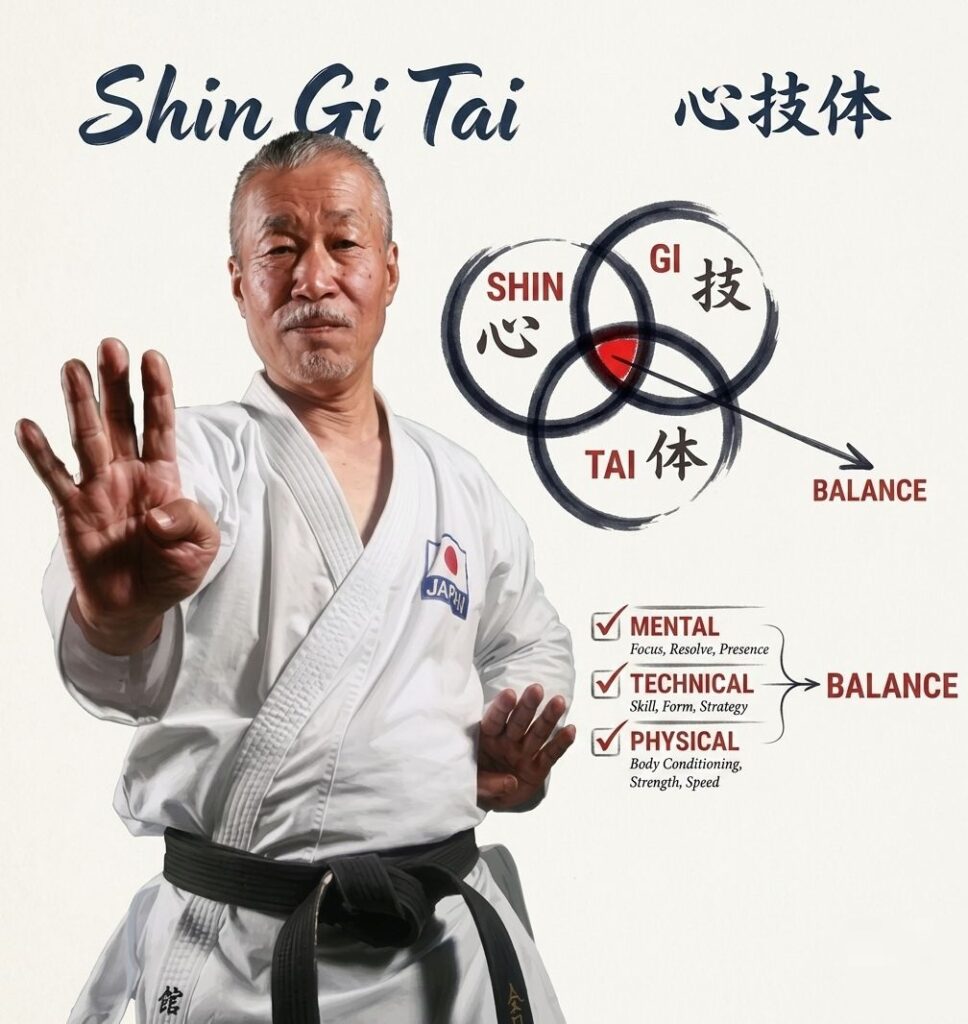
Shin Gi Tai 心技体 Shin Gi Tai (心技体): The True Balance of Mind, Technique, and Body in Martial Arts A proper balance of Shin Gi Tai (心技体) transforms an ordinary martial artist into an extraordinary one—a true Sensei.Shin Gi Tai is a fundamental concept in Japanese martial arts, representing the harmonious development of three essential elements:•心...
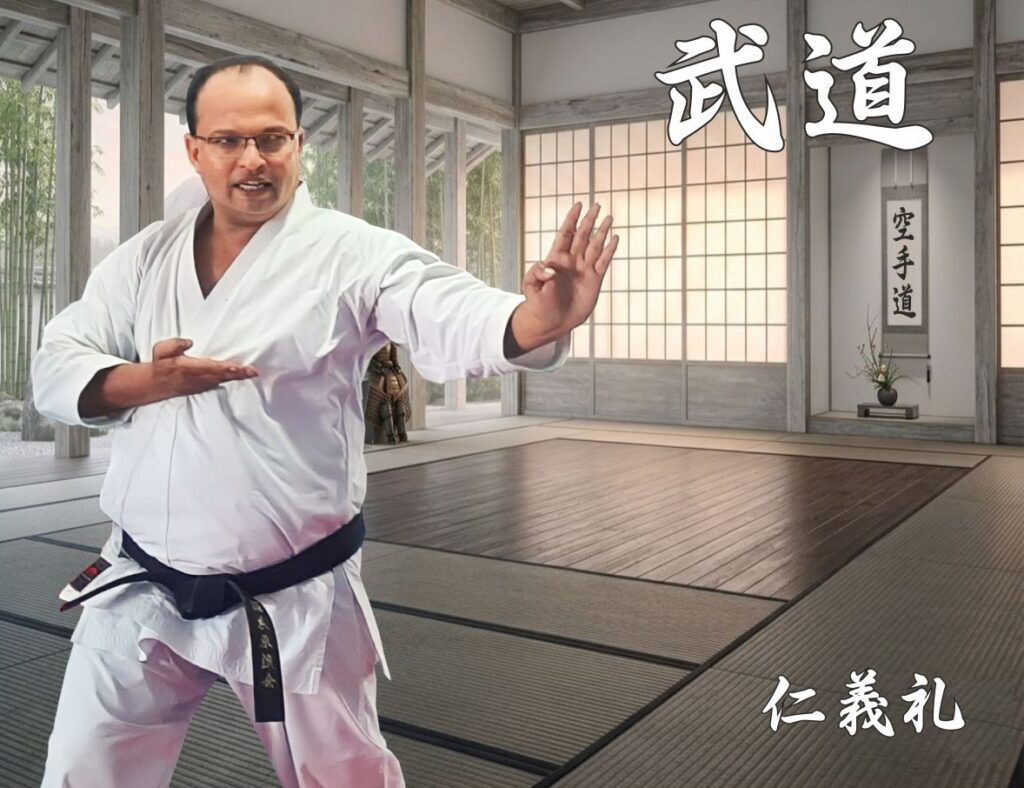
Philosophy – Budo 武道 The Evolution and True Purpose of Martial Arts From ancient times, human beings were constantly exposed to danger—from nature, wild animals, and even other humans. Survival demanded adaptability, awareness, and the development of effective methods of combat. These early methods included both armed and unarmed combat. Over time, unarmed techniques of...

Shintō-ryoku 浸透力 Section : Technical Insight Title: Shintō-ryoku 浸透力 The Shintō-ryoku (浸透力) concept explains the striking effect of a karate technique. In modern Karate, there is often a strong focus on sport-based training, where techniques emphasize speed, light contact, and pulling back strikes to avoid injury. While this develops important skills, it can lead some...

Section : Technical Insight Title: Dojukun 道場訓 ‘’Training Hall’’ rules are called Dojo kun (道場訓) in Japanese martial arts. Generally displayed at the entrance to a dojo or at the “front” (shomen) of the dojo, everyone should obey and follow it. Some schools of martial arts recite at the end of class...
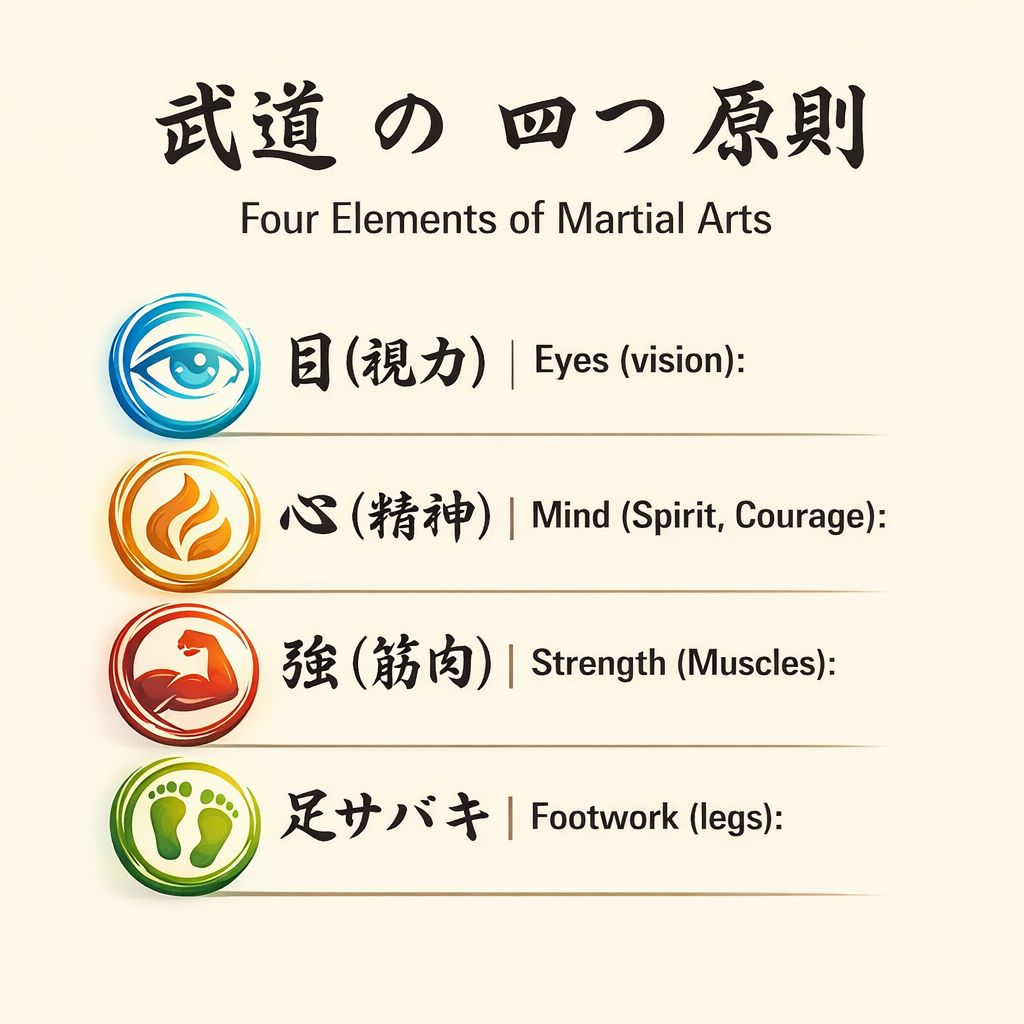
The Four Elements of Martial Arts – 武道 の 四つ 原則 Section : Karate Techniques Insight Title: 武道 の 四つ 原則 | The Four Elements of Martial Art 武道の四つの原則 | The Four Elements of Martial Arts The four essential elements of martial arts, which also apply to Karate, are as follows: 目 (視力) | Eyes...

Section :Section : Karate Techniques Insight Title: Uke No Go Gensoku 受けの五原則 | Five Principles for Defense Uke no Go Gensoku (受けの五原則) | Five Principles of Defense The Shito-Ryu Karate system formalizes and emphasizes the Five Principles of Defense, developed by Kenwa Mabuni, known as Uke no Go Gensoku (受けの五原則): 落花 Rakka (Falling Petals):Receiving the opponent’s...

Tachikata たち型 Section : Technical Insight Title: Tachikata たち型 Tachikata (立ち方) is a Japanese term referring to stances and lower body positions in karate. The foundation for improving karate techniques lies in correct body positioning and balance. Powerful, accurate, smooth, and fast techniques can only be executed through stable and strong stances. A practitioner must maintain...

Section updated in: Technical Insight Title: Shito-Ryu Kata 型 or 形 Kata (型 or 形) is a Japanese term meaning “form.” It refers to a structured and precise sequence of choreographed martial arts techniques practiced in a set pattern. Kata serves as a vital method for preserving the traditional techniques of martial arts, carefully passed down...

Shito-Ryu Characteristics | Techniques 糸東流 特徴 | 手法 Section : Technical Insight Title: Shitoryu Karatedo History 糸東流歴史 Shito-Ryu Karate: A Complete and Versatile Martial Art System Shito-Ryu is a traditional style of Karate that integrates multiple classical martial systems, primarily including Shuri-Te, Naha-Te, Tomari-Te, Hakkaku Ken, and Ryukyu Kobujutsu. This unique integration brings together diverse...
- 1
- 2