


Tachikata (立ち方) – The Foundation of Karate Stances
It refers to the stances and lower body positions used in Karate. Correct body positioning and balance form the foundation of effective karate techniques. Powerful, accurate, smooth, and fast techniques can only be executed through stable and well-structured stances.
A Karateka must maintain a strong and balanced position without becoming rigid, while also being able to transition smoothly from one stance to another. Proper stances develop stability, mobility, balance, and the efficient generation of power.
Stances may be classified according to:
High and one-leg stances
Middle-high and lower stances
The alignment of the feet, knees, and center of gravity
Different stances also utilize varying forms of leg tension:
Inside tension such as in Sanchin-dachi
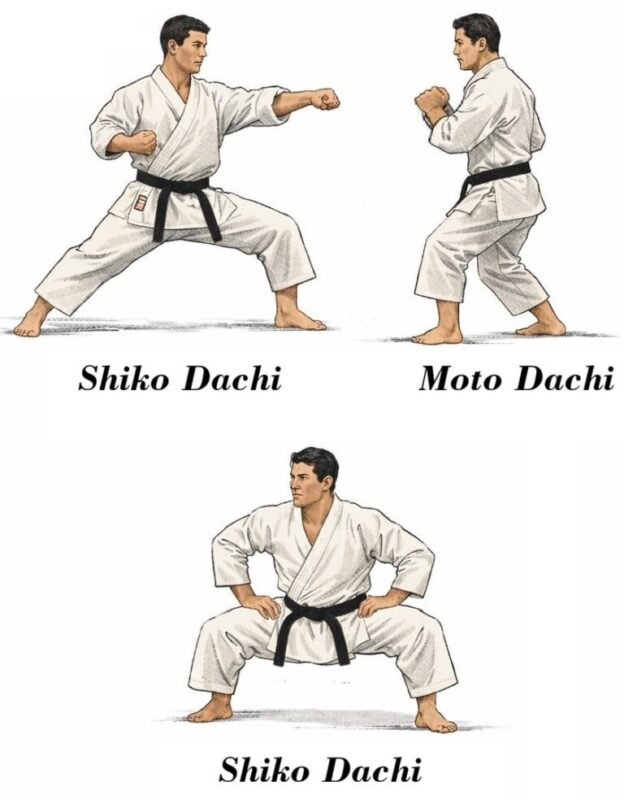
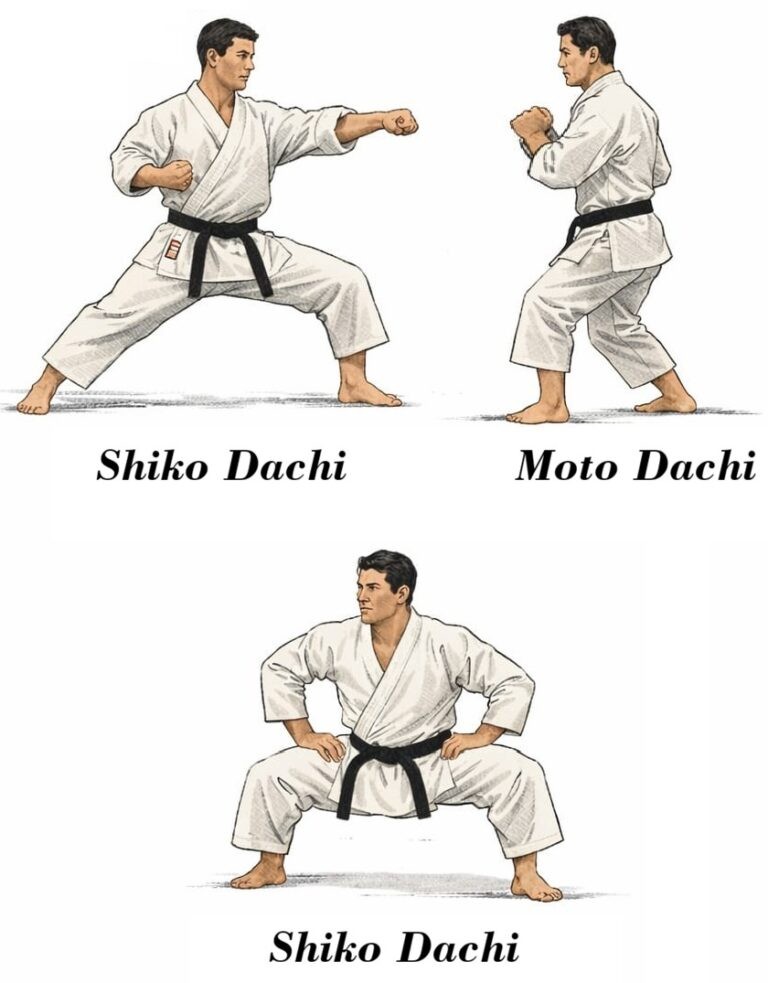
Outside tension - such as in Shiko-dachi
Important Principles of Stances
Soles of the Feet : The ball of the foot or the full sole, depending on the stance, should maintain firm contact with the floor for stability and grip.
Ankles : The ankles must remain flexible and strong to support body weight and movement efficiently.
Knees: The knees should bend naturally in the direction of the toes while maintaining proper alignment.Leg Tension: The legs should apply appropriate inward or outward tension according to the requirements of the stance.
Hips Position: The hips must remain correctly aligned to maintain posture, balance, and effective technique execution.
Center of Gravity: Lowering the center of gravity increases stability and strength. The Hara (Tanden) located below the navel, should remain engaged to improve balance, body control, and power generation.
Types of Stances : To perform any stance correctly:
Lower the center of gravity by bending the knees
Maintain correct posture and alignment
Apply proper inward or outward leg tension
High & One-Leg Stances
Heisoku-dachi (閉足立) – Joined feet stance
Musubi-dachi (結び立) – Heels together with toes outward
Heiko-dachi (平行立) – Parallel stance
Soto-hachiji-dachi – Toes pointed outward
Uchi-hachiji-dachi – Heels pointed outward
Sagi-ashi-dachi (鷺足立) – Heron stance
Tsuru-ashi-dachi (鶴足立) – Crane stance
Uki-ashi-dachi – Floating one-leg stance
Middle-High Stances
Naihanchi-dachi (内歩進立) – Wide parallel stance with inward knee tension
Moto-dachi (基立) – Basic or fighting stance
Sanchin-dachi (三戦立) – Hourglass stance
Han Zenkutsu-dachi (半前屈立) – Half front stance
Seisan-dachi (十三立) – Universal stance
Renoji-dachi (レの字立) – L-shaped stance
Lower Stances
Kosa-dachi (交差立) – Cross stance
Kokutsu-dachi (後屈立) – Back stance
Shiko-dachi (四股立) – Sumo stance
Zenkutsu-dachi (前屈立) – Front stance
Nekoashi-dachi (猫足立) – Cat stance
Katahiza-dachi (片膝立ち) – One-knee stance.
Through disciplined and regular practice, Tachikata develops stability, mobility, balance, and the ability to generate effective power, forming an essential foundation of traditional Karate-Do.
Section : Technical Insight Title: Tachikata たち型


