

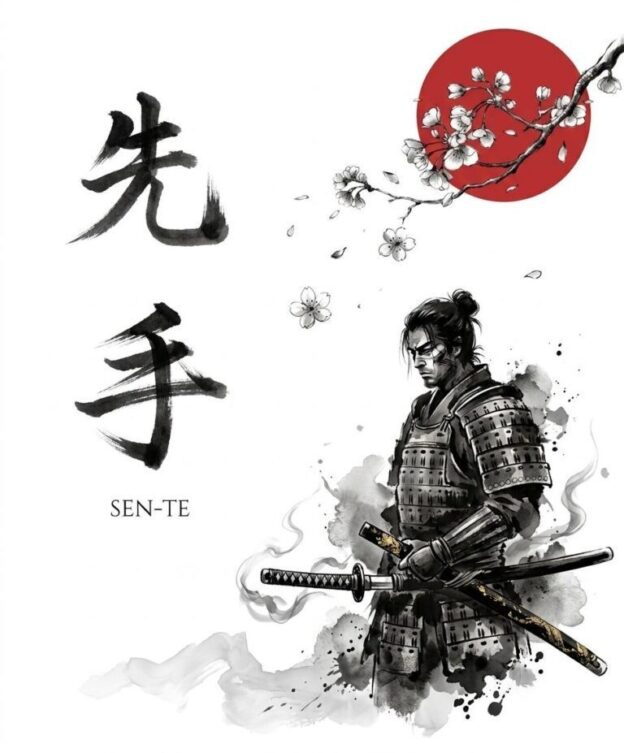
Sen-te 先手 - The Principle of Initiative in Martial Arts
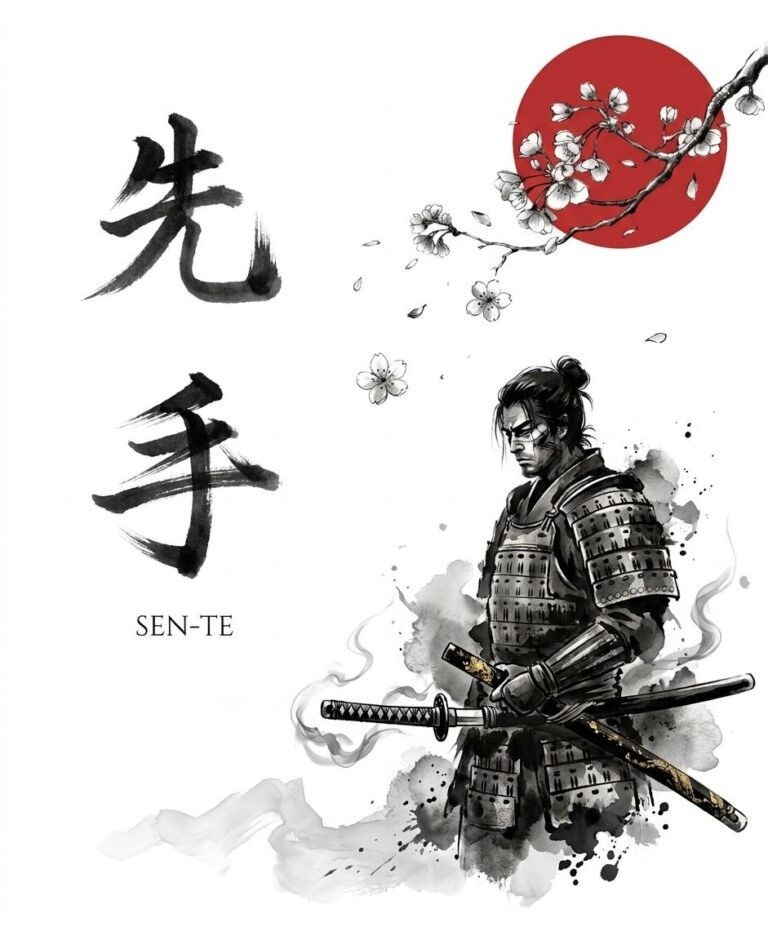
Sen-te 先手) - The Principle of Initiative in Martial Arts
In martial arts, Sen-te 先手 refers to the initiative taken to control timing and response during combat. This principle is deeply rooted in the teachings of The Book of Five Rings by the legendary Japanese swordsman Miyamoto Musashi. Mastering Sen enables a practitioner to dominate the flow of engagement through precise timing, awareness, and strategy. There are three primary levels of Sen:
1. Go No Sen (後の先) – Defense and Counterattack
This is the foundational level of timing. The practitioner allows the opponent to initiate the attack and then responds by evading or blocking, followed by an immediate counterattack.
It develops awareness, patience, and reactive timing.
2. Sen No Sen (先の先) – Simultaneous Defense and Attack
At this intermediate level, the practitioner anticipates the opponent’s intention and responds by defending and attacking at the same time.
This requires sharper perception and timing than Go No Sen, as both actions occur simultaneously, placing the practitioner one step ahead.
3. Sen Sen No Sen (先先の先) – Pre-emptive Counterattack
This is the highest level of initiative. The practitioner senses the opponent’s intent even before the attack is fully executed and counters preemptively.
It demands exceptional timing, focus, alertness, and refined intuition, making it the most advanced and superior application of Sen.
Application in Karate Training
In Karate-Do practice, the progression of Sen reflects the student’s development:
Beginners should focus on Go No Sen, learning proper defense and immediate counterattacks.
Intermediate students progress to Sen No Sen, integrating simultaneous defense and offense.
Advanced practitioners refine Sen Sen No Sen, mastering anticipation and pre-emptive action. This structured progression not only enhances technical skill but also serves as a clear indicator of a practitioner’s growth in timing, reaction, and mental awareness.
Section: Technical Insight Title: Sen-te (先手)